

Certified Corrosion & Materials Professional
Program Overview
COURSE DESCRIPTION
The API 571 Advanced Corrosion & Materials Professional Certification Preparation program is designed to enhance the knowledge of corrosion processes among specialized inspectors, corrosion engineers, chemical engineers and other professionals across the entire petrochemical industry.
WHAT WOULD YOU GET?
This course also prepares delegates for DOUBLE certification exams:
- TUV / TSCS 1.6 CERTIFIED CORROSION & MATERIALS PROFESSIONAL - API 571
- API CERTIFICATION PREPARATION PROGRAM
This course is designed to:
- Train individuals who are interested in obtaining the API 571 Inspector Certification.
- Provide individuals with an advanced knowledge of how corrosion mechanisms drive RBI conclusions.
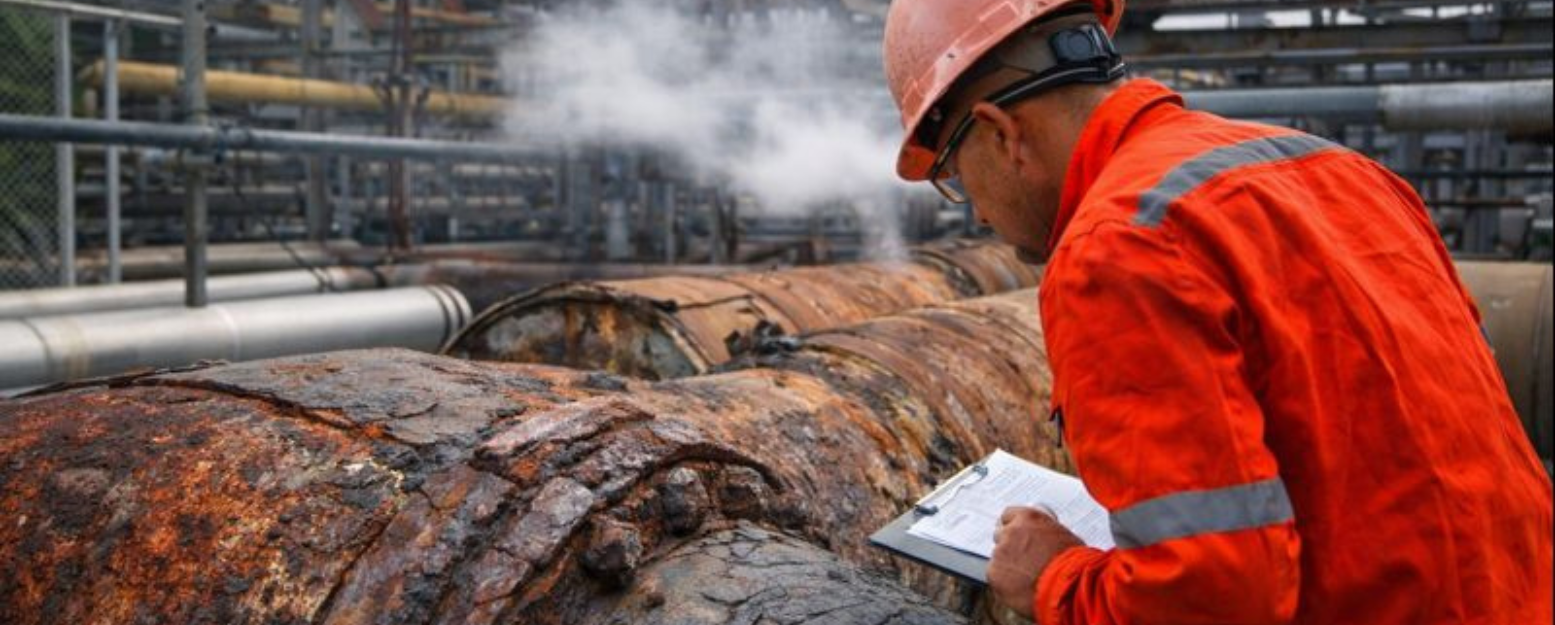
Proper identification of damage mechanisms is important when implementing the API Inspection Codes (API 510, API 570, API 653) and conducting Risk Based Inspection (RBI) per API 580 and API 581. When performing a fitness-for-service (FFS) assessment using API 579, the damage mechanisms need to be understood and need to be considered when evaluating the remaining life. This program aims to improve safety, reliability, and minimize liability of fixed equipment by learning common damage mechanisms in the refining and petrochemical industry as covered in API 571. The roles of the engineer and inspector in identifying affected materials and equipment, critical factors, appearance of damage, prevention and mitigation, inspection and monitoring will be covered to introduce the concepts of service-induced deterioration and failure modes. This course is intended for anyone interested in gaining a fundamental understanding of damage mechanisms in metals. Obtaining the API 571 Inspector certification will add value to your professional credentials and show your employers and clients that you have obtained a high level of proficiency and understanding in this field.
COURSE OBJECTIVES
The course provides participants with the knowledge necessary to:
- Be well prepared and equipped with adequate knowledge and skills to pass the API 571 Exam.
- Have a general background on the scope, organization and use of API 571 and be able to review the standards and other references related to it.
- Understand general damage mechanisms applicable to the industry and be able to identify their features and functions.
- Determine the various mechanical and metallurgical failure mechanisms such as brittle fracture, stress rupture, steam blanketing, cracking, thermal shock, corrosion and fatigue.
- Identify general damage mechanisms on uniform or localized loss thickness and explain the various types of corrosion related to it.
- Describe damage mechanisms on high temperature corrosion including oxidation, sulfidation, carburization and metal dusting.
- Know refining industry damage mechanisms used in uniform of localized loss in thickness phenomena.
- Describe refining industry damage mechanisms for environment assisted cracking and be able to identify the other types of mechanisms.
WHO SHOULD ATTEND?
- Engineers
- Inspectors
- Designers
- Experienced Maintenance Personnel
...who are involved in designing, operating, maintaining, repairing, inspecting and analyzing pressure vessels, piping, tanks and pipelines for safe operations in the refining, petrochemical and other related industries.
No required class pre-requisites. However, if you wish to pursue the API Certification Exam, a minimal years of experience on subject matter is required depending on your educational qualifications.
Please refer to the Exam Qualification Requirements at: www.api.org/icp
COURSE DURATION
- 5 Days Training
DAILY SCHEDULE
- 9:00am - 5:00pm
ITEMS TO BRING
- Calculator
- Laptop
- Lots of Questions
- A “CAN-DO” Attitude
- API RP 571 Code(in soft / hard copy)
Our Trainer
Our trainer more than 20 years of work in research and industrial projects, as well as training activities especially in Risk-based Inspections, Damage Mechanism Assessments and Fitness for Service for Power Plants and Oil & Gas Facilities. Participated or led more than 20 EU funded projects, and participated in a number of national projects in the area of material research and education abroad.